Manual Hospital Bed
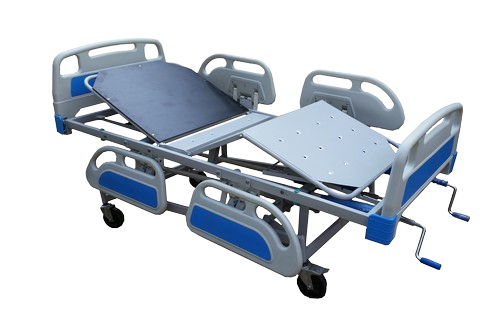
The manual hospital bed is a multi-position inpatient bed used for sleeping, examination, treatment, and recovery care. It supports head, knee, and height adjustment through hand-crank mechanisms, allowing staff to position patients without electrical power.
Product Description
Design and Construction
The bed uses a tubular steel frame with a four-section mattress platform that separates the head, trunk, thigh, and leg sections for controlled positioning. The platform surface is formed from perforated steel or welded mesh, which supports ventilation and accommodates radiolucent imaging workflows. Collapsible side rails on both sides provide fall protection and assist with transfers, while four locking castors support smooth movement and secure bedside immobilization. Blue and grey molded rail panels and a durable epoxy-coated finish give the frame a clinical, easy-to-clean construction suited to repeated ward use.
Clinical Applications
This bed is used in inpatient wards, general surgery recovery areas, orthopedic care units, palliative care rooms, and long-term care facilities. It supports post-operative recovery, routine nursing care, wound inspection, dressing changes, and patient repositioning for pressure relief. The adjustable sections assist with feeding, respiratory comfort, limb elevation, and safe transfer to wheelchairs or stretchers. It also supports traction-related positioning and bedside clinical access during examinations and procedures.
Load Capacity and Dimensions
The frame supports patient loads in the 150 to 200 kg range, depending on configuration and accessory setup. The bed provides multi-position adjustment of the backrest, knee section, and overall height, with a four-section platform that enables flat, semi-Fowler, and flexed positioning.
Maintenance and Durability
The steel frame and molded components are cleaned with hospital-grade disinfectants and non-abrasive wipes. Crank assemblies, castors, and rail hinges require routine inspection, lubrication, and tightening to maintain smooth operation. Mattress covers and upholstery panels are replaced when worn, and the bed is built for long service life in high-turnover wards.
Recommended Settings
This bed is suited to district hospitals, tertiary hospitals, rehabilitation units, nursing homes, and hospice environments. It is also practical in facilities that require reliable patient positioning without dependence on mains electricity. Surgical wards, orthopedic departments, and general medicine units use this furniture for daily inpatient care.
Summary
The manual hospital bed provides adjustable support, safe mobility, and stable bedside positioning for routine clinical care. It is available through MedPrax Market.
Specifications
| Parameter | Specification |
|---|---|
| Classification | Medical FurnitureHospital Furniture |
| Clinical Applications | Inpatient WardsGeneral SurgeryOrthopedic CareLong-term Care FacilitiesPalliative Care |
| Detailed Specs | The manual hospital bed is a foundational piece of medical furniture designed to support patient positioning, comfort, and clinical accessibility across a wide range of inpatient care settings. Equipped with two or three hand-cranked mechanisms, the bed allows nursing staff to independently adjust the backrest inclination, knee-break elevation, and overall bed height without requiring electrical power, making it suitable for facilities with limited or unreliable electrical infrastructure. The four-section mattress platform—head, trunk, thigh, and leg—is constructed from perforated steel or welded mesh to promote air circulation and accommodate radiolucent imaging requirements. Collapsible or detachable side rails on both sides prevent patient falls during sleep and transfers, while four heavy-duty locking castors enable smooth repositioning within the ward and secure immobilization at the bedside. The epoxy-coated tubular steel frame resists corrosion and supports patient loads up to 150–200 kg. Manual hospital beds are widely deployed in general inpatient wards, surgical recovery areas, orthopedic traction units, long-term care facilities, and palliative care hospices. |
Need Procurement Support?
Not sure about technical sizing or site planning? MedPrax can help identify and supply suitable equipment — including financing assistance and customs support.
Related Medical Furniture
Patient Monitor
Medical device for monitoring patient vital signs in ICU, OT and ward settings