

Why labour-room procurement should be planned as a system
A labour room can appear fully equipped on an inventory sheet and still be unprepared for a time-critical birth. The gap is often not the absence of major equipment. It is the failure of ordinary items to work together: a delivery bed that is slow to reconfigure, an assisted-birth device stored away from the point of care, a postpartum haemorrhage kit without a defined escalation pathway, or a newborn resuscitation station that has not been checked before the next delivery.
Good procurement therefore begins with clinical workflow, not a catalogue. The bed, maternal monitoring, assisted-birth equipment, haemorrhage-response supplies, newborn equipment, storage, power backup, training, and maintenance should be specified as one operational system.
This guide is written for hospitals, maternity centres, clinics, procurement teams, and biomedical engineers in any market. Clinical use must always follow local regulations, approved protocols, manufacturer instructions, and the direction of appropriately trained clinicians.
1. Delivery beds: evaluate movement, access, and cleanability
A delivery bed must support prolonged labour, rapid repositioning, assisted procedures, safe transfer, and thorough cleaning between patients. A repurposed examination couch may look similar, but it rarely offers the same access, adjustability, or fluid protection.
When comparing delivery beds, ask suppliers to demonstrate the complete clinical sequence rather than presenting a feature list.
Essential specification questions
- Positioning: Which labour and delivery positions are supported, and how quickly can staff move between them?
- Height adjustment: Does the travel range suit patient transfer, clinician working height, and the needs of the intended user population?
- Leg section: Is it removable or retractable without tools, and can one trained staff member operate it safely?
- Patient supports: Are side rails, hand grips, stirrups, and foot supports secure, adjustable, removable, and easy to disinfect?
- Mattress construction: Are seams sealed against fluid ingress? Can the cover tolerate the facility's approved cleaning agents?
- Safe working load: Is the rated load clearly documented, including the effect of articulated positions and attached accessories?
- Mobility and braking: Do the castors move easily across the actual floor surface, and does the braking system hold under load?
- Power resilience: For electric models, what functions remain available during a power failure, and is a manual emergency release provided?
- Serviceability: Are actuators, controls, castors, mattresses, and accessories locally supportable throughout the expected life of the bed?
Acceptance test
Do not sign the installation certificate after an empty-bed demonstration alone. Use the manufacturer's approved test method to verify the rated movements under a representative safe load. Confirm braking, side-rail latching, leg-section locking, emergency release, battery backup where fitted, and clearance around nearby equipment. Record the results against the serial number.
2. Vacuum extractors: procure the device, training, and backup together
Vacuum-assisted birth is a clinical procedure, not simply an equipment feature. The appropriate instrument, patient selection, consent, technique, and decision to stop belong to trained clinicians working under an approved protocol. The procurement team's role is to ensure that the selected system supports that protocol reliably.
The Royal College of Obstetricians and Gynaecologists' guidance on assisted vaginal birth emphasizes competency, governance, and safe use across different clinical scenarios. That makes training evidence and local credentialing as important as the hardware itself.
What to compare
- System type: Handheld, integrated pump, or connection to a regulated vacuum source.
- Cup options: Available materials, shapes, and sizes, with their intended indications clearly documented by the manufacturer.
- Pressure control: A readable gauge, controlled pressure generation, and safeguards against unintended pressure changes.
- Sterility model: Single-use components versus reusable components, including the validated reprocessing method and turnaround time.
- Traceability: Lot numbers, expiry dates, instructions for use, and a practical method for recording which device was used.
- Availability: A sealed backup unit or contingency plan for device failure, damage, or an expired pack.
- Storage: Immediate access at the point of care without compromising package integrity or inventory control.
Ask the supplier to include hands-on training for the intended clinical team, competency documentation where applicable, and clear instructions for inspection, cleaning, disposal, and restocking. If reusable components are chosen, involve infection prevention and sterile-services teams before purchase.
3. Postpartum haemorrhage readiness: equipment cannot replace a care pathway
Postpartum haemorrhage response depends on early recognition, first-line treatment, monitoring, escalation, access to blood products where required, and timely surgical intervention. A device purchased in isolation cannot provide that system.
WHO's 2025 consolidated postpartum haemorrhage guideline revalidates a context-specific recommendation for uterine balloon tamponade when bleeding due to uterine atony after vaginal birth has not responded to standard first-line treatment. It specifies that surgery and blood products must be accessible if needed, a first-line protocol must be routinely implemented, other causes should be reasonably excluded, staff must be trained, and maternal monitoring must be adequate.
For procurement teams, the important lesson is straightforward: confirm the clinical pathway before choosing the product.
Build the package around the protocol
- Select only devices approved for the intended use in the destination market.
- Confirm compatibility with the facility's monitoring, fluid-management, and emergency-transfer arrangements.
- Define who may insert and manage the device and how competency will be maintained.
- Store the kit with the haemorrhage-response supplies specified by the clinical protocol.
- Track sterile-pack integrity, expiry dates, and minimum stock levels.
- Run multidisciplinary drills that test recognition, communication, equipment access, escalation, and restocking.
- Review every use and near miss so equipment or workflow failures lead to corrective action.
Facilities without the required clinical support should not treat tamponade equipment as a substitute for referral planning. Escalation routes, transport, communication, and receiving-facility arrangements should be established before an emergency.
4. The newborn resuscitation corner: standardize readiness before every birth
The newborn care area should be close enough for immediate access, laid out consistently, and ready before each delivery. WHO guidance on basic newborn resuscitation supports preparation of a warm environment and appropriate resuscitation equipment at the place of birth.
The exact equipment list should follow the facility's clinical level and local protocol, but the procurement and readiness review should normally address:
- A firm, clean resuscitation surface with a controlled source of warmth
- Appropriately sized ventilation devices and masks
- A regulated oxygen or air source where required by protocol
- Suction equipment designed and set for newborn use
- A visible timer or clock
- Thermal-care supplies and temperature monitoring
- Newborn assessment and monitoring equipment appropriate to the facility
- Clear storage labels, sealed consumables, and defined replenishment levels
- Reliable mains power, battery support where relevant, and an outage procedure
Avoid relying on a power-on light as proof that a warmer or resuscitation device is ready. Use the manufacturer's prescribed functional checks and record faults immediately. Any failed item should have a clear out-of-service label and an available replacement pathway.
5. Put point-of-care storage into the specification
Response time is partly a layout decision. Frequently needed emergency items should be available where care is delivered, while remaining protected, traceable, and easy to audit.
A useful labour-room storage plan separates:
- Always-ready equipment: Items checked before every delivery or at the start of each shift.
- Sealed emergency kits: Assisted-birth and haemorrhage supplies with visible integrity and expiry status.
- Replenishment stock: Controlled backup quantities outside the immediate work zone.
- Out-of-service equipment: Physically separated so a failed device cannot return to use accidentally.
Use the same location and labelling pattern in every room. During a drill, a staff member unfamiliar with that particular room should still be able to find the required equipment quickly.
Pair the layout with a documented readiness check at the frequency set by facility policy and the manufacturer's instructions. Include the delivery bed's positioning and locking functions, the presence and expiry of sealed assisted-birth supplies and backup, and the prescribed functional checks and consumables for the newborn care area. Record faults and remove failed equipment from service until it has been cleared.
6. Compare total readiness cost, not purchase price alone
The lowest equipment quote may become the most expensive option once accessories, consumables, training, preventive maintenance, downtime, and replacement parts are included.
Request a lifecycle-cost schedule covering:
- Purchase price and included accessories
- Installation and commissioning
- Initial and refresher training
- Single-use consumables and expected expiry losses
- Reprocessing requirements for reusable components
- Preventive maintenance and calibration
- Battery, mattress, castor, actuator, and control replacement
- Service response times and loan-unit availability
- Warranty exclusions and post-warranty support
- End-of-life disposal requirements
Standardizing compatible devices across multiple rooms can reduce training complexity and spare-part inventory, but only if the chosen model meets the clinical needs of each setting.
If capital budgeting is the main constraint, compare outright purchase with available medical equipment financing options using the same full lifecycle cost.
7. A practical pre-purchase and handover checklist
Before requesting quotes
- Map the current labour, delivery, haemorrhage-response, and newborn workflows.
- Record delivery volume, room count, staffing model, patient population, and referral capability.
- Ask clinical, biomedical, infection-prevention, facilities, and procurement teams to agree on mandatory requirements.
- Separate essential requirements from optional features.
- Confirm local regulatory, electrical, language, and documentation requirements.
When comparing suppliers
- Compare compliance against the same specification matrix.
- Verify model-specific regulatory documentation and manufacturer authorization.
- Request references for installation and service in comparable facilities.
- Review consumable availability, lead times, shelf life, and minimum order quantities.
- Ask for training, warranty, preventive maintenance, escalation contacts, and response times in writing.
At installation and handover
- Match the delivered model, serial numbers, accessories, and consumables to the purchase order.
- Complete functional and safety checks using approved procedures.
- Verify room layout, power, storage, cleaning access, and emergency clearances.
- Train all relevant shifts, not only the team present during installation.
- Record warranty dates, service contacts, maintenance intervals, and expiry-controlled stock.
- Run a simulated workflow before accepting the system into service.
Questions to include in a MedPrax Market enquiry
A structured enquiry helps suppliers return comparable proposals. Include:
- Facility type and level of maternity care
- Number of labour rooms and expected delivery volume
- Required bed type, quantity, adjustment method, and essential accessories
- Vacuum extractor system preference and sterility model
- Haemorrhage-response equipment requested by the approved clinical protocol
- Newborn resuscitation and warming requirements
- Available power, backup power, medical gas, and room constraints
- Training, installation, documentation, and service expectations
- Required delivery timeline and destination country or region
You can browse medical equipment, use the hospital setup equipment guide to plan adjacent requirements, and review patient monitoring options before submitting a bundled maternity-care enquiry.
Conclusion
Reliable labour-room procurement is not about owning the longest equipment list. It is about ensuring that each item is appropriate, accessible, maintained, and supported by trained people and a tested clinical pathway.
Start with workflow, specify the complete system, evaluate lifecycle support, and make acceptance testing part of the purchase. That approach produces a labour room that is not only equipped on paper, but ready for the next delivery.
References
Related products
Browse products related to the equipment referenced in this article.
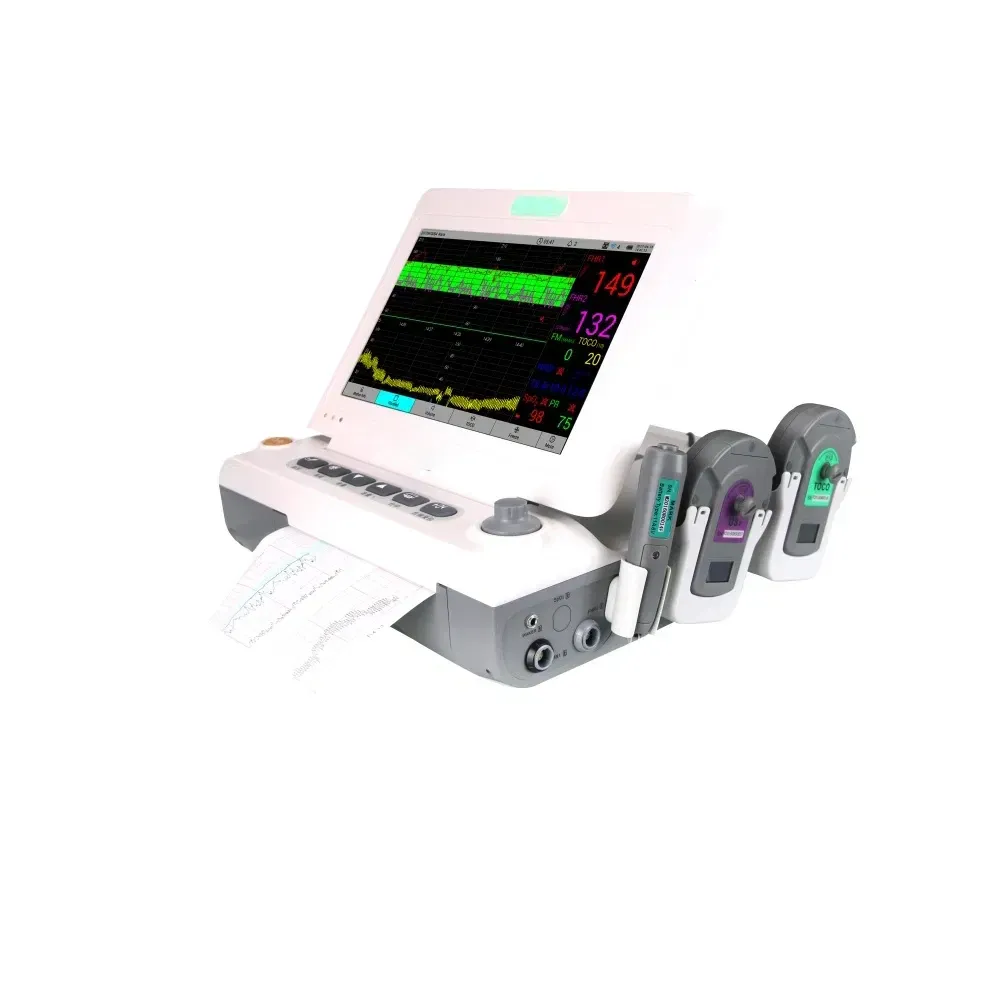
Multi Parameter Patient Monitor Maternal Monitor Fetal Monitor
A multiparameter patient monitor displays physiological measurements for observation of patient status. It supports monitoring workflows in clinical areas where staff need to review several measurements together. This listing references maternal and fetal monitoring in its title, so the required patient-monitoring or obstetric configuration should be established for the selected model.
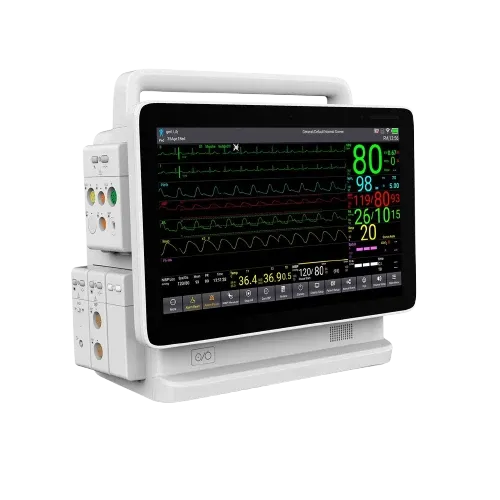
Modular High-End ICU Patient Monitor with Capnography (EtCO2)
The listed configuration is a modular ICU patient monitor with plug-and-play parameter slots, sidestream/mainstream EtCO2 capnography, dual invasive blood pressure (IBP), and 15-inch high-resolution touchscreen. The modular format supports configuration of monitoring parameters for intensive-care observation.
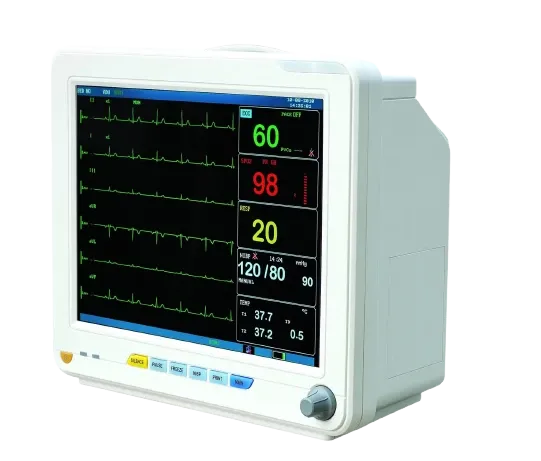
5-Parameter Multipara Patient Monitor (12.1" Display)
The listed configuration is a comprehensive 12.1-inch color TFT multi-parameter patient monitor offering continuous real-time ECG, SpO2, NIBP, Respiration, and Dual Temperature tracking with arrhythmia analysis. It displays physiological measurements together for observation and clinical review of patient status.
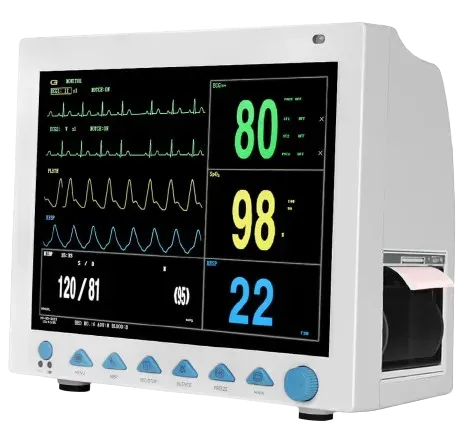
Patient Monitor
A patient monitor displays physiological measurements for observation of patient status. This listing covers monitoring equipment for intensive care, operating theatres and hospital wards. The available measurements and accessories depend on the selected configuration and the department monitoring requirements.