

The Core Engineering Difference: How Steam Sterilizers Remove Air
Steam sterilization depends on a simple thermodynamic requirement: saturated steam must make direct, physical contact with every surface of every instrument at a specific temperature and pressure for a validated exposure time. The two standard cycle benchmarks are:
- 121°C (250°F) at approximately 1.1 bar (15 psi) gauge pressure for a minimum of 15 to 30 minutes
- 134°C (273°F) at approximately 2.1 bar (30 psi) gauge pressure for a minimum of 3 to 5 minutes
Under these conditions, moist heat denatures and coagulates microbial structural proteins and enzymes, inactivating even highly heat-resistant bacterial endospores such as Geobacillus stearothermophilus.
In practice, the primary obstacle to achieving sterility is not steam generation; it is trapped air. Air is a thermal insulator with poor heat-transfer properties compared to saturated condensing steam. If air remains inside the narrow lumen of a surgical cannula, between the jaws of hinged forceps, or inside a wrapped instrument pouch, it creates a cool, dry micro-pocket. While steam outside the pouch reaches 134°C, the air pocket inside may linger at 100°C to 110°C in dry heat conditions—temperatures entirely inadequate for spore destruction within a standard steam exposure cycle.
Furthermore, trapped air inhibits the condensation process. When saturated steam contacts cooler metal, it condenses instantly, releasing roughly 2,260 kJ of latent heat per kilogram while creating a localized vacuum that pulls more steam into the space. Air pockets block this condensation mechanism.
The classification letters established under EN 13060—the international reference standard for small steam sterilizers (chambers smaller than 60 liters or one sterilization module)—describe one engineering mechanism: how the machine extracts air from the chamber and load before exposure, and how it dries the load afterward.
Class Breakdown: Class N, Class B, and Class S
Understanding the mechanical distinction between the three classes clarifies why two autoclaves of identical chamber volume carry radically different clinical capabilities and price points.
Class N: Downward Gravity Displacement
Class N sterilizers are non-vacuum units ("N" represents non-vacuum). They operate through thermodynamic downward displacement:
- Heating elements in the chamber base or an external boiler boil water to generate steam.
- Because hot steam is less dense than cool air, the steam rises to the top of the chamber.
- As more steam enters, it pushes the heavier ambient air downward toward an open drain valve at the base of the chamber.
- Once temperature sensors at the drain confirm that pure steam is discharging (indicating displacement of bulk chamber air), the drain closes and pressure builds to the set exposure point.
Where Class N works: Solid, unwrapped, non-porous instruments made of bare metal or heat-resistant glass—such as open stainless steel diagnostic trays, extraction forceps, or laboratory glassware—transferred immediately to point-of-use.
Where Class N fails: Class N units cannot reliably purge air from hollow channels, narrow lumens, porous textiles, or sealed sterilization pouches. The density differential between steam and air is insufficient to displace air trapped at the blind end of a catheter or deep inside a dental handpiece turbine channel. Similarly, packaging paper or sterilization wraps act as physical barriers that block passive gravity exchange. Instruments sterilized in a Class N machine cannot be bagged before cycle start; once removed from the chamber, they are exposed to ambient room air immediately, losing sterility.
Class B: Fractionated Pre-Vacuum
Class B sterilizers ("B" represents big / broad scope) represent the highest level of small steam sterilizer performance defined by EN 13060. They incorporate an electric vacuum pump and micro-valving system capable of executing a fractionated pre-vacuum cycle:
- The vacuum pump pulls the chamber down to a deep negative pressure (typically between -0.80 and -0.90 bar gauge).
- A controlled pulse of pressurized steam floods the chamber, equalizing pressure and diluting remaining trace air.
- The machine evacuates the mixture again.
- This cycle of deep vacuum evacuation followed by steam injection repeats three to four consecutive times before the main sterilization dwell begins.
By alternating mechanical evacuation with dynamic steam injection, a Class B sterilizer pulls air out of deep, narrow lumened channels, porous surgical drapes, and multi-layered wrapped cassettes. When the final exposure phase begins, 100% saturated steam penetrates every crevice of the load.
Following exposure, the Class B unit initiates a vacuum-assisted post-drying phase. The vacuum pump removes all residual steam while internal heaters maintain chamber wall temperature, boiling off condensation from wrapped packs without introducing room air. Filtered air passes through a 0.2-micron HEPA bacterial air filter to re-equilibrate pressure, ensuring packs emerge bone-dry. Because dry, sealed packaging maintains an impermeable microbial barrier, Class B loads remain sterile in storage until opened in the procedure room.
Class S: Manufacturer-Specified Custom Cycle
Class S sterilizers ("S" represents specific / special) represent the middle tier. EN 13060 permits manufacturers of Class S autoclaves to engineer proprietary air-removal sequences—such as a single-stage pre-vacuum pulse, repeated positive-pressure steam flushes, or trans-atmospheric pressure pulsing—tailored to specific, validated load profiles.
Two Class S autoclaves from different manufacturers can possess entirely different clinical capabilities:
- Model A may be certified and factory-validated to sterilize single-layer pouched solid instruments and simple hollow items of Type B definition (short, wide lumens).
- Model B may only handle unwrapped solid items and porous loads of limited thickness, but cannot clear long narrow hollows.
Because Class S performance is defined by each manufacturer rather than a universal standard baseline, a facility cannot assume an S-class autoclave will reprocess a given surgical tool. The buyer must obtain written verification that the manufacturer's test documentation covers the specific instrument types, pouch materials, and cassette sizes used in their department.
Load Capability and Performance Comparison Matrix
The following matrix cross-references instrument configurations against the three EN 13060 sterilizer classes:
| Instrument / Load Configuration | Class N | Class S | Class B | Primary Failure Risk if Mis-Assigned |
|---|---|---|---|---|
| Solid, Unwrapped Metal Instruments (e.g., examination probes, flat elevators, bare forceps) | Validated | Validated | Validated | None for immediate point-of-use. Cannot be stored sterile. |
| Pouched / Bagged Solid Instruments (single or double paper-plastic peel pouches) | Not Validated | Manufacturer Dependent | Validated | Air retention inside pouch; incomplete steam contact; wet packs. |
| Wrapped Instrument Trays & Cassettes (surgical linen or non-woven polypropylene wrap) | Not Validated | Manufacturer Dependent | Validated | Condensation pooling; wet wraps allowing microbial strike-through. |
| Simple Hollow Items (Type B) (internal diameter ≥5 mm, length ≤150 mm) | Not Validated | Manufacturer Dependent | Validated | Air entrapment in lumen; temperature lag inside channel. |
| Complex Hollow Instruments (Type A) (narrow lumens, cannulas, endoscopic trocars, dental handpieces) | Not Validated | Rare / Specific Models Only | Validated | Critical failure: air trapped in inner core leaves spores viable. |
| Porous & Textile Loads (surgical gowns, drapes, gauze packs, cotton rolls) | Not Validated | Manufacturer Dependent | Validated | Steam fails to penetrate textile weave; damp interior post-cycle. |
| Full Implantable Devices (orthopedic screws, titanium plates, dental implant abutments) | Not Validated | Not Recommended | Validated | Zero-tolerance margin; must be packaged, processed, and stored sterile. |
Matching Autoclave Classes to Facility Types and Workflows
Selecting an autoclave based strictly on unit price rather than clinical load requirements creates immediate regulatory non-compliance and sterility assurance risks. Match your procurement to your specific department workflow:
1. Outpatient Consultation Suites and Dermatology Clinics
Facilities performing non-invasive examinations or minor surface procedures (e.g., punch biopsies, suture removals) that handle exclusively solid, non-lumened stainless steel tools can operate safely with a Class N sterilizer, provided items are used immediately after cycle completion. If your clinical standard requires storing pre-sterilized instrument packs in treatment drawers for future patients, Class N is disqualified because items cannot be wrapped or pouched.
2. General Dental Practices and Implantology Centers
Modern dental care requires a Class B autoclave. Dental handpieces, air-rotors, contra-angles, and ultrasonic scaler handpieces feature internal water lines, air drive channels, and complex gear shafts. Health guidelines—including CDC Infection Control Guidelines for Dental Health-Care Settings and national dental boards—stipulate that rotary and surgical handpieces must be heat-sterilized between every patient. Gravity-displacement Class N units cannot push air out of internal handpiece bearings. Furthermore, implant kits, bone grafting instruments, and surgical burs must remain sealed in sterile pouches until the moment of placement.
3. Ambulatory Surgery Centers and Minor Operation Theatres
Surgical suites performing laparoscopy, arthroscopy, ophthalmic procedures, or plastic surgery reprocess cannulated drills, trocars, suction tubes, and delicate microsurgical scissors. These tools fit the definition of EN 13060 Type A hollow bodies. They demand the fractionated pre-vacuum and guaranteed post-drying cycles of a Class B machine. Attempting to clear hollow cannulas in a gravity sterilizer risks surgical site infections (SSIs) that breach clinical governance standards.
4. Hospital Central Sterile Supply Departments (CSSD)
A tabletop Class B autoclave (typically 18 to 45 liters) serves well as a dedicated emergency flash/rapid unit or specialty satellite sterilizer (e.g., within an ophthalmic theatre or labor suite). However, it cannot handle the volume of a general hospital operating suite running multiple continuous surgical cases. Hospital CSSDs require large-chamber steam sterilizers governed by EN 285, which use floor-mounted, pit-installed, or double-door pass-through designs with chamber capacities of 150 to 1,000+ liters, integrated with centralized pure-steam infrastructure.
Facilities planning broader surgical upgrades can review our operation theatre equipment guide and outpatient clinic equipment guide to ensure processing capacity matches procedural throughput.
Critical Specifications Beyond the Letter Rating
When reviewing competing quotes for steam sterilizers, evaluate these technical details:
1. Chamber Volume and Usable Tray Geometry
Datasheets prominently quote total chamber volume (e.g., 18L, 23L, or 45L), but total volume is misleading. Autoclave chambers are cylindrical pressure vessels, whereas clinical instruments sit on rectangular trays or in rigid wire cassettes.
- An 18-liter chamber (typically ~250 mm diameter × 350 mm depth) accommodates standard examination cassettes and small pouch sets, holding 3 to 4 small trays.
- A 23-liter chamber (typically ~250 mm diameter × 450 mm depth) provides the extra 100 mm of depth required to reprocess standard laparoscopic trocars, long orthopedic forceps, and double-stacked dental cassettes without touching chamber walls.
- Always cross-check the internal rack dimensions against the length of your longest surgical instrument container before placing a purchase order.
2. Water Quality and Steam Generator Architecture
Steam sterilizers are vulnerable to feedwater mineral content. Tap water containing calcium, magnesium, silicates, and chlorides will boil onto internal heating elements, temperature probes, and solenoid valves, precipitating mineral scale that causes premature component failure.
- Feedwater specifications: Most modern Class B tabletop units require demineralized or distilled water with an electrical conductivity under 15 µS/cm (or total dissolved solids <10 ppm).
- Built-in conductivity sensors: High-tier units feature an integrated inline conductivity monitor that tests water purity before each cycle, locking the start button if water quality drops into scale-forming ranges.
- Direct feed vs manual fill: High-volume facilities should choose units with automated water-demineralization connections (reverse osmosis or two-stage deionizer cartridges) and automated wastewater drain lines. Manual top-fill tanks consume nursing hours and lead to accidental spillage over electronic enclosures.
3. Electrical Load and Infrastructure Requirements
Class B autoclaves draw substantial electrical power during their rapid steam-generation and drying phases.
- A standard 23-liter tabletop Class B unit typically features peak power ratings between 2,000 W and 3,200 W (10A to 16A at 220–240V, or dedicated 20A/30A circuits on 110–120V systems).
- Operating a sterilizer on an overloaded branch circuit or sharing an outlet with refrigeration or diagnostic analyzers causes breaker trips mid-cycle, aborting runs and forcing complete reprocessing. Ensure the clinical reprocessing room has a dedicated, non-shared electrical circuit.
4. Cycle Data Logging and Digital Traceability
Regulatory audits, legal defensibility, and hospital quality accreditations mandate verifiable sterilization cycle records. Any autoclave procured today must provide verifiable data outputs:
- Recorded cycle parameters: Time-stamped logs of chamber temperature, chamber pressure, pre-vacuum levels, sterilization hold time, and drying duration.
- Output methods: Integrated physical thermal dot-matrix printers create paper chits attached directly to physical load registers. Additionally, USB data export or Ethernet/Wi-Fi connectivity enables automated digital record archiving to central hospital information systems (HIS). Avoid sterilizers that rely solely on analog gauges or visual LED indicators without downloadable data logs.
Sterilization Validation and Quality Assurance Protocols
Installing a Class B sterilizer does not guarantee sterile tools unless the facility operates an ongoing chemical, physical, and biological monitoring program. Hospital accreditation programs and international standards (including ISO 17665 and ANSI/AAMI ST79) expect evidence of routine testing:
Physical Verification (Per Cycle)
└── Time, Temperature, and Pressure display / digital log confirmation

Chemical Verification (Per Pack / Per Load)
├── Type 1: Process Indicators (external tape / pouch color change)
├── Type 4 / 5: Multi-variable & Integrating Indicators (inside each pack/cassette)
└── Type 6: Emulating Indicators (cycle-specific verification)

Mechanical Air Removal Testing (Daily, Pre-Vac Only)
├── Bowie-Dick Test Pack: Validates uniform steam penetration into porous loads
└── Helix Process Challenge Device (PCD): Validates air evacuation from narrow hollow lumens

Biological Verification (Weekly or Daily)
└── Geobacillus stearothermophilus spore vials incubated to confirm zero microbial growth
The Bowie-Dick and Helix Process Challenge Devices
Pre-vacuum sterilizers require daily verification of air-extraction efficiency:
- The Bowie-Dick Test (ISO 11140-4): Evaluates air removal from porous materials. A standardized pack of paper sheets containing a central chemical indicator sheet is run through a dedicated 134°C Bowie-Dick cycle before the first clinical batch of the day. If residual air remains, it forms an air bubble in the center of the pack, leaving an uneven, patchy color pattern on the indicator sheet.
- The Helix PCD (EN 867-5): Specifically challenges air removal from hollow instruments. It consists of a 1.5-meter coiled Teflon tube with a 2 mm internal diameter connected to a sealed capsule holding a chemical indicator strip. Steam can only reach the chemical indicator if the autoclave's vacuum pump successfully evacuates all air from the long, narrow coil. Any leak in door gaskets, valve seals, or vacuum pump diaphragms will cause a Helix test failure.
Commissioning Qualification: IQ, OQ, and PQ
When taking delivery of a medical sterilizer, your biomedical engineering team should execute three formal qualification stages before clinical handover:
- Installation Qualification (IQ): Confirms the machine arrived undamaged, utility supplies (voltage, frequency, grounding, water quality, drainage, ventilation clearances) match factory requirements, and calibration certificates are intact.
- Operational Qualification (OQ): Verifies that safety interlocks function correctly (door locks under pressure, cycle aborts if water level drops, overheating trip mechanisms activate) and that empty-chamber temperature profiles match specification across all cycle presets.
- Performance Qualification (PQ): Demonstrates that the sterilizer consistently achieves sterility conditions when fully loaded with the facility's actual clinical instrument sets, verified using biological indicators and internal chemical integrators.
Total Cost of Ownership: The Economics of Class B Upgrades
When comparing pricing, procurement teams frequently encounter a Class N machine quoted at roughly one-third to one-half the capital cost of an equivalent-volume Class B autoclave. Evaluating this purchase solely on initial purchase price is a classic procurement error.
Total Cost of Ownership Breakdown
┌─────────────────────────────────────────────────────────────┐
│ Initial Capital Outlay: Equipment + Core Rack Accessories   │
├─────────────────────────────────────────────────────────────┤
│ Recurring Consumables:                                      │
│ • High-purity distilled / RO water cartridges               │
│ • Biological spore indicators and chemical integrators      │
│ • Daily Bowie-Dick / Helix PCD test strips                  │
│ • Replacement silicone door gaskets (annual replacement)    │
│ • 0.2-micron bacteriological air filters (biannual)         │
├─────────────────────────────────────────────────────────────┤
│ Operational Overhead:                                       │
│ • Cycle time differences (15 min N vs 35-45 min B w/ drying)│
│ • Workflow efficiency: sterile storage vs immediate-use     │
│ • Cost of outsourced sterilization runs during audits       │
│ • Avoided surgical site infection liabilities and recalls   │
└─────────────────────────────────────────────────────────────┘
The Cost of Premature Replacement
In clinical practices that handle wrapped loads or cannulated tools, purchasing a Class N machine creates a predictable operational failure. Within six to twelve months, clinical expansion, clinician onboarding, or infection control audits mandate the cessation of unwrapped hollow instrument processing. The facility must then purchase the Class B unit anyway, while the original Class N machine is relegated to low-volume auxiliary tasks or sold at steep depreciation.
Packaged Storage vs Immediate-Use Economics
A Class N unit processes an unwrapped tray in 15 to 20 minutes, but those instruments must be used immediately at the chairside or bedside. This forces clinical staff into hurried, on-demand reprocessing between procedures, increasing turnover friction and instrument wear.
A Class B unit requires 35 to 50 minutes for a complete wrapped cycle with vacuum drying. However, because instruments emerge dry and hermetically sealed inside barrier pouches, staff can reprocess entire batch runs at the end of the shift and store sterile cassettes in instrument cabinets for days or weeks. This decouples instrument cleaning from chairside scheduling, enabling higher patient throughput.
Clinics balancing capital allocation against procedural scaling can explore medical equipment financing options to structure Class B capital outlays across predictable monthly operational budgets.
Technical Specifications Checklist for Sourcing Enquiries
Before submitting a formal Request for Quotation (RFQ) on MedPrax Market, specify these parameters:
- Intended Load Profile: Explicitly list your load types (e.g., solid unwrapped, pouched cassettes, Type A hollow handpieces, porous surgical drapes).
- Sterilizer Class Required: Specify EN 13060 Class B (or Class S with explicit manufacturer validation documentation for your load list).
- Chamber Capacity & Geometry: Required internal volume (18L, 23L, 29L, or 45L) and minimum chamber depth to accommodate your longest procedural trays.
- Steam Generation Design: Independent external steam generator (faster cycles, less thermal stress on chamber) vs internal chamber heating elements.
- Vacuum Pump Architecture: Oil-free diaphragm or high-vacuum mechanical pump with stated minimum negative pressure capability (-0.80 bar or lower).
- Feedwater Integration: Dual internal water storage tanks (clean feed tank and separate used drain tank) plus optional direct reverse-osmosis feed connection.
- Data Capture Hardware: Integrated physical printer and USB data export port for electronic record management.
- Testing & Commissioning Deliverables: Inclusion of factory calibration certificates, manufacturer IQ/OQ templates, and starter packs of Bowie-Dick and Helix PCD test sets.
- Warranty and Service SLA: Comprehensive warranty covering vacuum pumps, heating elements, and electronic boards, with confirmed local service response timelines and scheduled preventive maintenance visits.
You can browse our medical equipment catalog to compare certified Class B and Class N steam sterilizers, consult our hospital setup equipment list for comprehensive CSSD room planning, or explore high-grade surgical instruments to ensure instrument packaging aligns with your sterilization equipment.
References
- European Standard EN 13060: Small steam sterilizers. Requirements and test methods for sterilizers with chambers smaller than 60 liters.
- European Standard EN 285: Sterilization. Steam sterilizers. Large sterilizers.
- ISO 17665-1: Sterilization of health care products — Moist heat — Part 1: Requirements for the development, validation, and routine control of a sterilization process for medical devices.
- ANSI/AAMI ST79: Comprehensive guide to steam sterilization and sterility assurance in health care facilities.
- Centers for Disease Control and Prevention (CDC): Guideline for Disinfection and Sterilization in Healthcare Facilities (Infection Control Guidelines).
- World Health Organization (WHO): Decontamination and Reprocessing of Medical Devices for Health-care Facilities (2016).
- ISO 11140-4: Sterilization of health care products — Chemical indicators — Part 4: Class 2 indicators as an alternative to the Bowie and Dick-type test for detection of steam penetration.
- European Standard EN 867-5: Non-biological systems for use in sterilizers — Part 5: Specification for indicator systems and process challenge devices for use in performance testing for small sterilizers (Type B and Type S).
Related products
Browse products related to the equipment referenced in this article.
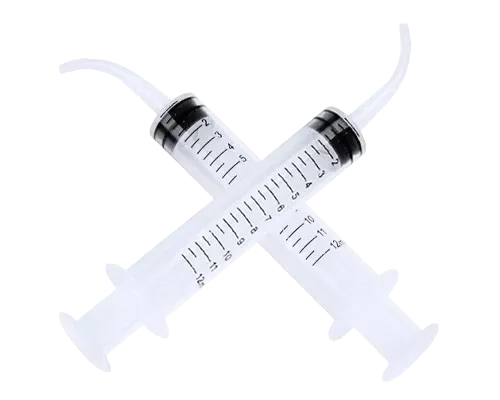
Reusable Irrigation Syringe
A reusable irrigation syringe for controlled delivery of irrigation fluid. The listing does not state its capacity, material, tip or connector type, graduations, or validated reprocessing method. Confirm the exact variant and manufacturer instructions for use before purchase.
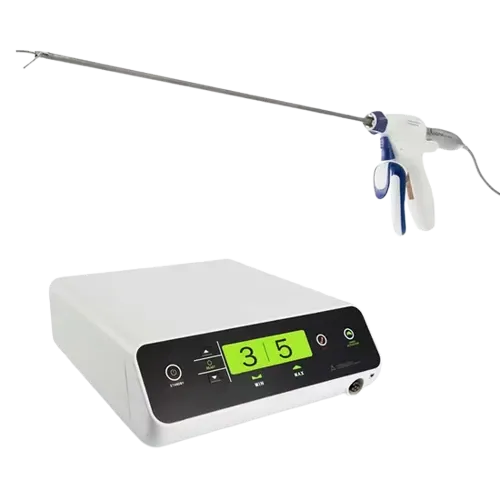
Ultrasonic Harmonic Surgical Scalpel & Generator System
The listed configuration is a ultrasonic harmonic surgical generator and shears system providing precise simultaneous cutting and coagulation of soft tissue and vessels up to 5mm with minimal thermal spread. It uses ultrasonic energy for surgical tissue cutting and coagulation through a compatible handpiece.
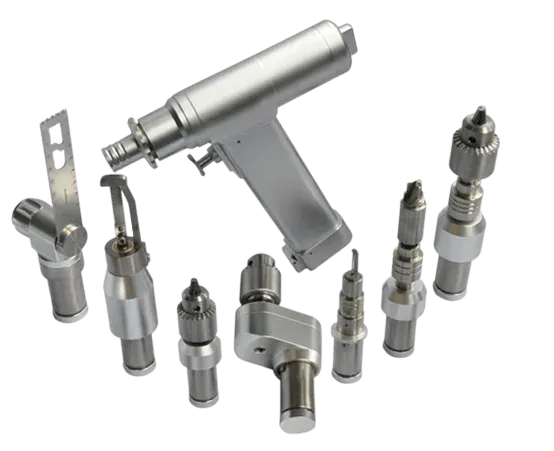
Craniotomy Drill Set
A craniotomy drill set provides drilling instruments for bone preparation during cranial surgery. It supports operative workflows requiring cranial access and controlled bone drilling. The set configuration is selected according to the required drill sizes, attachments and compatibility with the intended drive system.
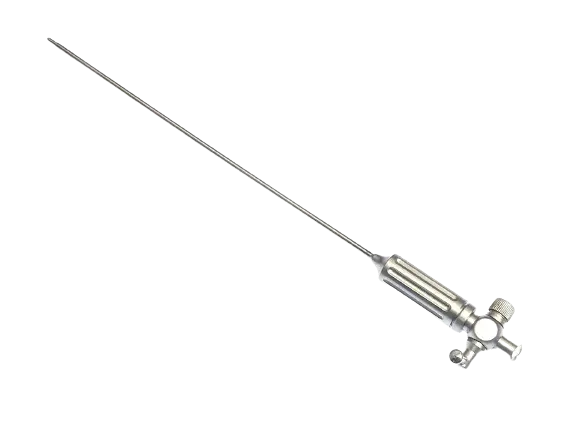
Veress Needle
A Veress needle is an access instrument used for introducing insufflation gas during laparoscopic preparation. It forms part of the equipment used to establish pneumoperitoneum before placement of working ports. The needle length and connection format are selected to suit the clinical access technique and insufflation setup.
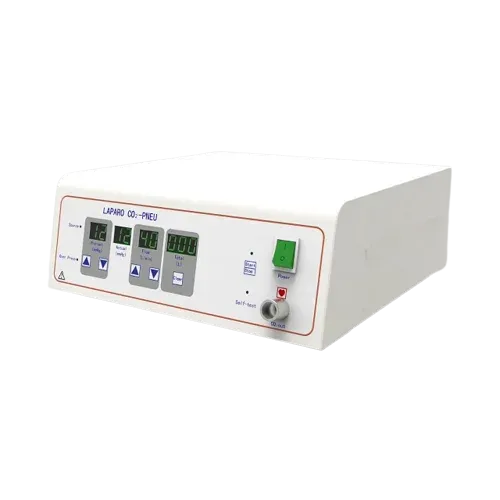
Insufflator
An insufflator delivers carbon dioxide to establish and maintain a working space during laparoscopic surgery. It supports pneumoperitoneum as part of the minimally invasive operative setup. The system is selected according to the required flow capability, pressure controls and compatibility with the intended tubing and access equipment.
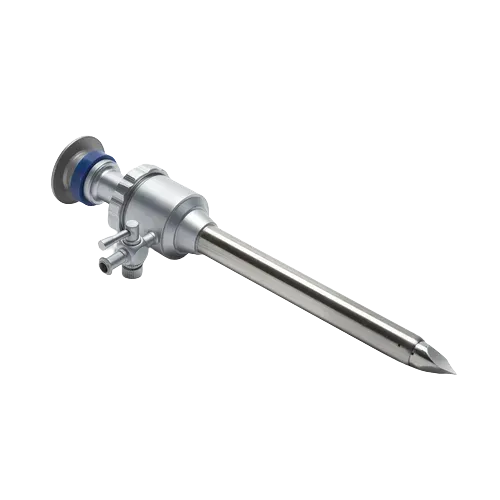
Trocars
Trocars provide access ports through which laparoscopic instruments can enter an operative cavity. The range is available in multiple sizes to suit different instrument diameters and access requirements. They form part of the laparoscopic setup and support the working channels required for the selected procedure.
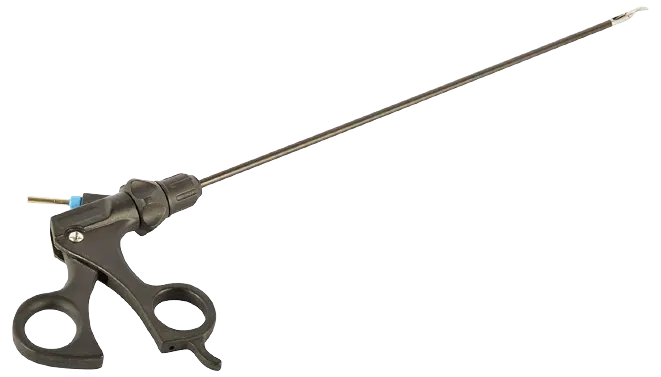
Laparoscopic Instruments
Laparoscopic instruments are shafted surgical tools used through trocar ports during minimally invasive procedures. The range covers grasping, retraction, cutting and other operative functions according to the selected instrument. Working length, shaft diameter and tip design are matched to the access ports and surgical task.
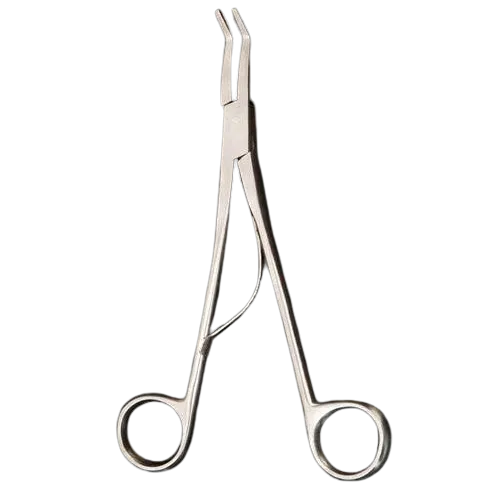
Surgical Clip Applicator
A surgical clip applicator is used to place clips for vessel or tissue ligation. The range includes applicator formats for open and laparoscopic approaches. The applicator must be selected with a compatible clip type and size for the intended ligation task.
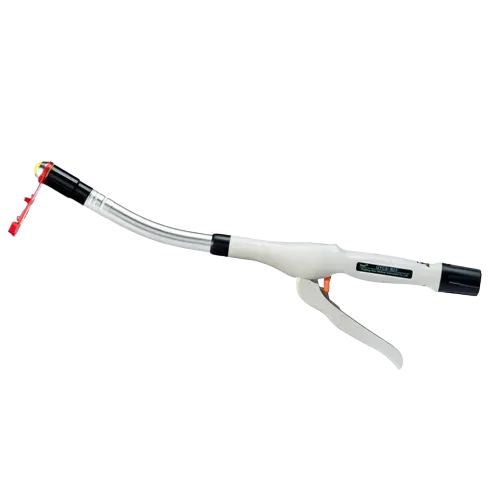
Circular Cutter
A circular cutter is a surgical instrument that creates a circular tissue cut and staple line. It supports re-anastomosis of hollow structures, including bowel, within an operative reconstruction workflow. The selected diameter and compatible components need to suit the intended anatomy and tissue-joining approach.
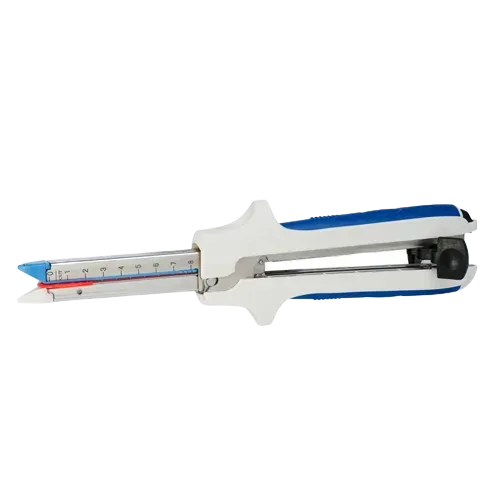
Linear Cutter
A linear cutter is a surgical stapling instrument that divides tissue along a linear path and staples the cut edges. The combined cutting and stapling action supports tissue separation and reconstruction. It is used in procedures involving resection or anastomosis, with cartridge selection matched to the intended tissue.
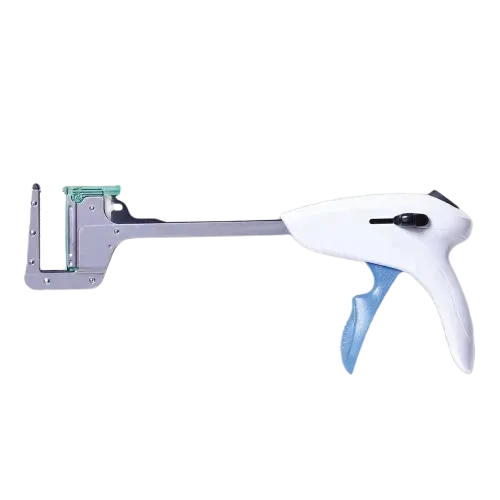
Linear Stapler
A linear stapler places a linear staple line to approximate or secure tissue during surgery. This listing describes a stapling instrument without a cutting function. It supports ligation and anastomosis workflows where stapling is required separately from tissue division.
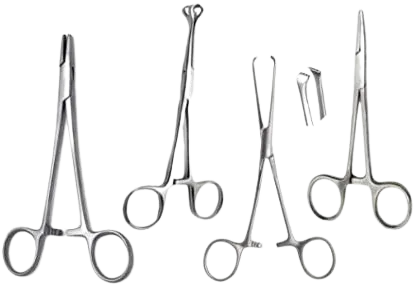
Surgical Forceps
Surgical forceps are grasping instruments used to hold tissue or small objects during clinical procedures. The range is available in different sizes and working-end profiles for different handling requirements. They support tissue manipulation, dressing placement and instrument handling as part of a surgical setup.