

What is a laparoscopic tower?
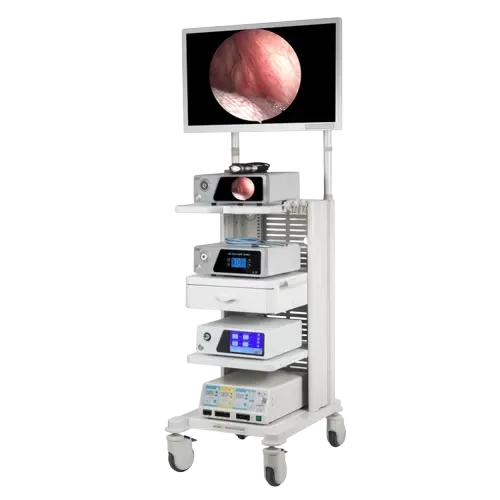
A laparoscopic tower, also called a lap tower or laparoscopy stack, is the mobile cart of video, light and insufflation equipment used in keyhole surgery. It turns the image from a telescope inside the abdomen into a magnified picture on a monitor, lights the operating field, and keeps the abdomen inflated with CO2 so the surgical team has room to work.
Laparoscopic tower parts and functions
Most towers combine the parts below. Some hospitals buy them as one integrated system; others build the stack from separate units.
| Part | Function | What to check |
|---|---|---|
| Camera head and camera control unit (CCU) | Captures the image from the telescope and processes the video signal | HD or 4K resolution, and fit with existing telescopes and couplers |
| Telescope (laparoscope) | Carries the image from inside the body; commonly 10 mm or 5 mm, 0° or 30° | Diameter and viewing angle for the procedures planned, and sterilisation method |
| Light source and fibre-optic light cable | Lights the surgical field through the telescope | LED or xenon, brightness, cable length and connector fit |
| CO2 insufflator | Inflates the abdomen and holds a set pressure during surgery | Maximum flow rate, pressure control, gas heating and safety alarms |
| Medical-grade monitor | Shows the live surgical image to the team | Size, and resolution matched to the camera |
| Recorder or documentation unit | Captures images and video for records and teaching | Storage, export format and hospital system integration |
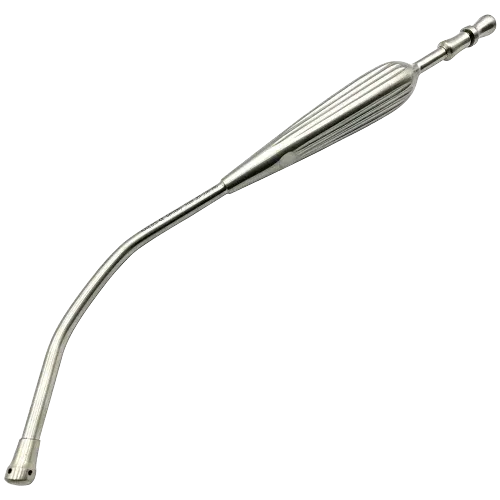
| Suction-irrigation system | Clears blood and fluid from the field | Pump or gravity design, and instrument compatibility |
| Electrosurgical unit | Cuts and coagulates tissue; often mounted on the tower | Monopolar, bipolar and vessel-sealing needs |
| Cart with isolation transformer | Holds and powers the stack safely | Shelf space, cable management and electrical safety |
Uses of a laparoscopic tower
Laparoscopic towers are used across general surgery (gallbladder removal, appendix removal, hernia repair), gynaecology (hysterectomy, ovarian cyst surgery, diagnostic laparoscopy), urology, and bariatric and colorectal surgery. The camera, light source and monitor can often be shared with other endoscopic procedures when the telescopes and cables are compatible; see laparoscopic tower vs endoscopy tower for where the two differ.
Comparison framework
Use this table to compare common tower configurations.
| Configuration | Good fit | Procurement watchpoint |
|---|---|---|
| HD tower | General surgery, gynecology, routine laparoscopy | Confirm camera head, coupler, light cable, monitor, and recorder compatibility |
| 4K tower | High-volume surgical centers and teaching hospitals | Check end-to-end 4K chain, storage, display, and surgeon training needs |
| Integrated tower | Hospitals standardizing multiple OTs | Review service contract, accessory lock-in, and uptime support |
What changes the price of a laparoscopic tower
Tower prices vary with the video chain (HD, 4K, 3D or fluorescence imaging), the brand, how many components are included, which telescopes and instruments are bundled, and the warranty and service terms. Ask every supplier for an itemised quote that lists each component and accessory so towers can be compared like for like.
Information to request
Ask for system diagrams, component list, warranty, installation plan, training scope, service response, compatible instruments, and catalogue documentation.