MedPrax Market

Price guide

Defibrillator Price: AED, Biphasic and Monitor-Defibrillators

Defibrillator prices for AEDs, biphasic defibrillators with AED mode, monitor-defibrillators with pacing and older monophasic units, plus pad and battery costs.

View biphasic defibrillator
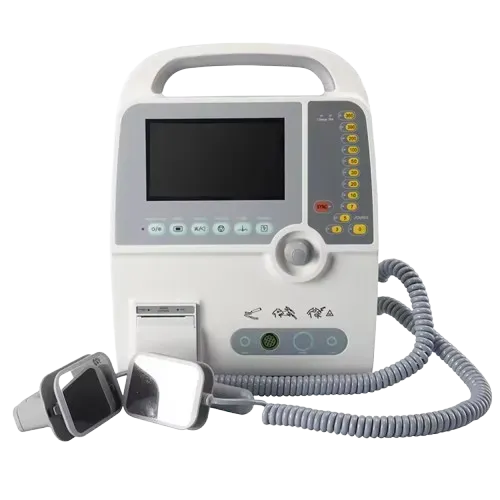
Defibrillator
Defibrillators

Defibrillator

A defibrillator delivers controlled electrical therapy as part of emergency cardiac care. It is used in resuscitation workflows where the required rhythm assessment and therapy functions must be available. The selected system and accessories are matched to the clinical setting and the intended defibrillation configuration.

PriceFrom US$1,150indicative
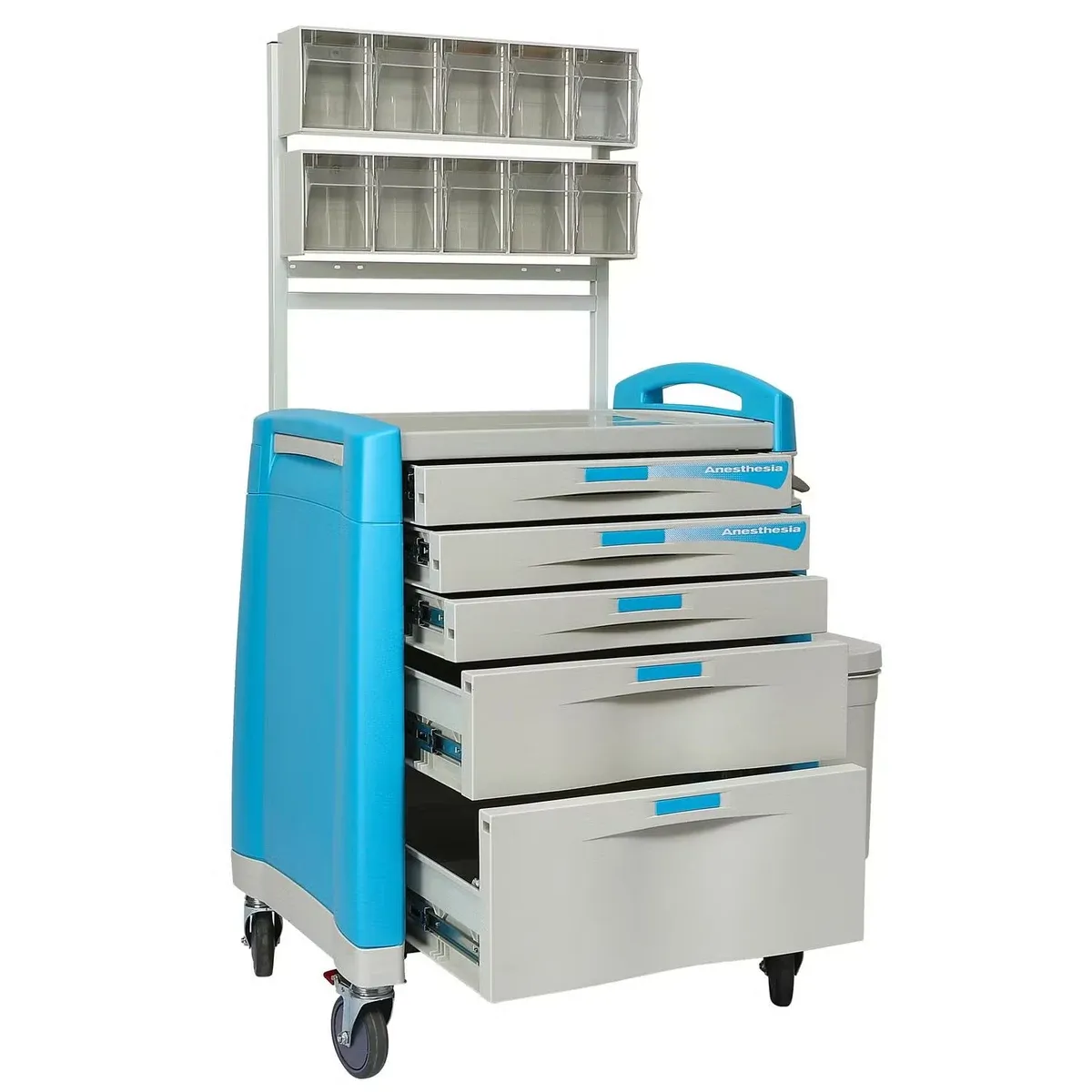
ABS ICU Resuscitation Trolley, BT168AM-100
Emergency Crash Carts

ABS ICU Resuscitation Trolley, BT168AM-100

This ABS resuscitation trolley organizes supplies for emergency treatment in intensive care and other clinical areas. The listing specifies swivel castors for movement between care locations and red, blue or grey colour options. It supports a mobile emergency-equipment workflow, with the storage arrangement and equipment holders selected to suit the department setup.

PriceFrom US$375indicative
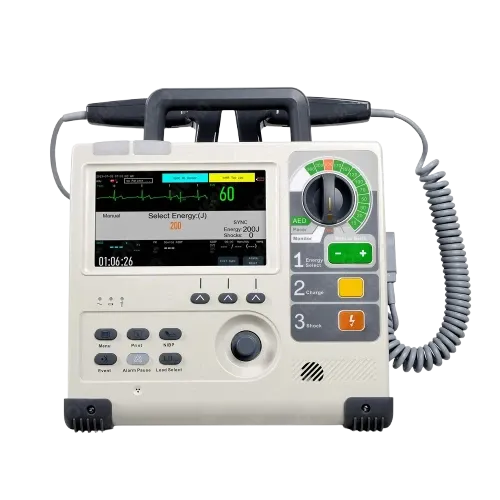
Biphasic Defibrillator Monitor with AED & External Pacing
Defibrillators

Biphasic Defibrillator Monitor with AED & External Pacing

The listed configuration is a biphasic defibrillator monitor with manual defibrillation, automated external defibrillator (AED) mode, synchronized cardioversion, transcutaneous external pacing, and 7-inch color display. It combines rhythm observation and electrical therapy functions for emergency cardiac-care workflows.

PriceFrom US$3,000indicative
Medical device company details displayed for buyer verification.
Company, tax, and institutional identifiers available for procurement review where applicable.
Applicable FDA, CE, and local regulatory documentation can be requested during procurement.
Enquiry-led sourcing for catalogues, installation needs, documentation, and service support.
Support for hospitals, clinics, diagnostic centers, distributors, and biomedical teams.

Defibrillator price ranges

A public-access AED typically costs US$1,200 – US$1,800. A biphasic defibrillator with an AED mode is US$2,700 – US$4,100, and a monitor-defibrillator with external pacing US$4,500 – US$6,700. Ranges are the typical landed price for new equipment (10th to 90th percentile across 53 countries) and the matching range for refurbished units, from the MedPrax price index reviewed in August 2026. They exclude GST or VAT, freight to site, installation and extended service unless a quote says otherwise. INR figures use 94.08 INR per USD (2026-11-16, frankfurter.dev) and are rounded.

EquipmentNew (USD)New (approx. INR)Refurbished (USD)
AED, public access (with cabinet)US$1,200 – US$1,800₹1.1L – ₹1.7LUS$390 – US$760
Biphasic defibrillator with AED modeUS$2,700 – US$4,100₹2.5L – ₹3.9LUS$1,100 – US$2,000
Monitor-defibrillator with pacingUS$4,500 – US$6,700₹4.2L – ₹6.3LUS$2,200 – US$3,700
Monophasic defibrillator (older technology)US$1,400 – US$2,200₹1.3L – ₹2.1LUS$520 – US$1,000
Crash cart, completeUS$1,000 – US$1,500₹94,080 – ₹1.4LUS$360 – US$650

What changes the price of a defibrillator

  • Operating model: an AED only needs voice prompts; a manual defibrillator adds an ECG monitor, energy selection and synchronised cardioversion.
  • Pacing and extra parameters such as SpO2, NIBP and EtCO2 turn a defibrillator into a transport monitor and raise the price.
  • Waveform: buy biphasic. Monophasic units are older technology and mostly found as refurbished stock.
  • Ruggedness, IP rating and battery runtime for ambulances and outdoor public-access sites.

Pads, batteries and service

Adult and paediatric pads have a shelf life of a few years and are replaced after every use; batteries age whether or not the unit is used. Over five years, pads, batteries and the service contract can approach the purchase price, so ask suppliers for the five-year cost. For a guide to choosing between AED, manual and semi-automatic units, see defibrillator types explained.

About these prices

The prices on this page are market intelligence: indicative figures from MedPrax research into manufacturer, distributor and retail prices. They are not quotations or offers to sell, and actual prices change with brand, configuration, order quantity, taxes, freight and installation. For accurate pricing, contact us or send an enquiry from the product page.

FAQs

How much does an AED cost?

A public-access AED typically costs US$1,200 – US$1,800 new, depending on cabinet, paediatric capability and remote monitoring.

How much does a hospital defibrillator cost?

A biphasic defibrillator with AED mode typically costs US$2,700 – US$4,100; monitor-defibrillators with pacing for ED and ICU use are US$4,500 – US$6,700.

Why is a supplier quote different from this defibrillator price range?

The range is a market reference for a typical configuration. A quote reflects the exact brand and model, accessories, warranty years, installation and training, taxes, freight to your site and the service contract, so compare quotes on the same scope before comparing totals.

Procurement guide

Defibrillator Price: AED, Biphasic and Monitor-Defibrillators Procurement Support

Need help sourcing defibrillator price: aed, biphasic and monitor-defibrillators?

Finding the right defibrillator price: aed, biphasic and monitor-defibrillators can be difficult when specifications, pricing, compliance expectations, installation needs and supplier options vary from one requirement to another. A hospital adding ICU capacity, a clinic starting diagnostics, a distributor serving a tender and a procurement manager replacing old equipment may all need a different shortlist.

Tell MedPrax what you are trying to achieve: the device or department, quantity, delivery city, expected timeline, preferred brands if any, and whether installation, training or documentation support is required. If the requirement is part of a wider setup, share the room count, bed count or department list so the sourcing conversation starts with the full picture.

What affects the right recommendation

A strong recommendation depends on more than the product name. MedPrax needs to understand the clinical use, workload, configuration, accessory list, consumables, warranty expectations, installation readiness, service support and documentation needs. A monitor, ventilator, ultrasound machine or surgical system may also require sensors, probes, mounts, cables, software, trolleys, calibration or user training before it can be used confidently.

For this requirement, related procurement areas may include Defibrillators and Emergency Equipment. If these products will be used in the same department, share them together. That helps MedPrax suggest options that fit the workflow instead of treating each device as a separate purchase.

  • Share the facility type, department and expected patient workload.
  • Mention required quantity, delivery location and procurement timeline.
  • List preferred brands or models, but say whether alternatives can be considered.
  • Include installation, training, warranty and documentation expectations early.

Get quote-ready before follow-up

Before comparing quotes, ask what is included with the device and what must be purchased separately. Request the catalogue, technical datasheet, accessory list, warranty terms, delivery timeline and service coverage. For ICU, OT, diagnostic, emergency or ward use, also discuss room readiness, power requirements, mounting, calibration, training and preventive maintenance.

Institutional purchases often need more than a commercial quote. Procurement and biomedical teams may require supplier details, manufacturer information, compliance documents where applicable, tax documents, warranty notes and technical comparison support. Sharing those needs early helps MedPrax prepare a more useful response.

Delivery, installation and local support

Delivery location changes the sourcing plan. A buyer in a metro city may care most about fast installation and service response, while a buyer in another region or country may need shipment documentation, customs support and landed-cost clarity. Share the destination city and country even if you are still comparing options.

This requirement is commonly connected with Emergency Care. If the equipment belongs to a department setup, send the department context rather than only one product name. ICU requirements may involve monitors, ventilators, respiratory support, beds and emergency devices; OT requirements may involve lights, tables, anesthesia, instruments and sterilization workflow.

Start with the problem you need solved

A useful MedPrax enquiry can be simple: "We need 10 patient monitors for Nagpur," "We are setting up a dialysis center," "We need a ventilator within this budget," or "Which ECG machine should we buy for a clinic?" Those situations give MedPrax the context needed to suggest practical next steps.

Buyers searching for Defibrillator Price, Aed Price, Defibrillator Machine Cost and Biphasic Defibrillator Price usually want availability, product fit and a reliable sourcing path. The more complete the first enquiry is, the easier it is to discuss catalogues, suitable models, accessories, warranty, documentation and procurement coordination without repeated clarification.